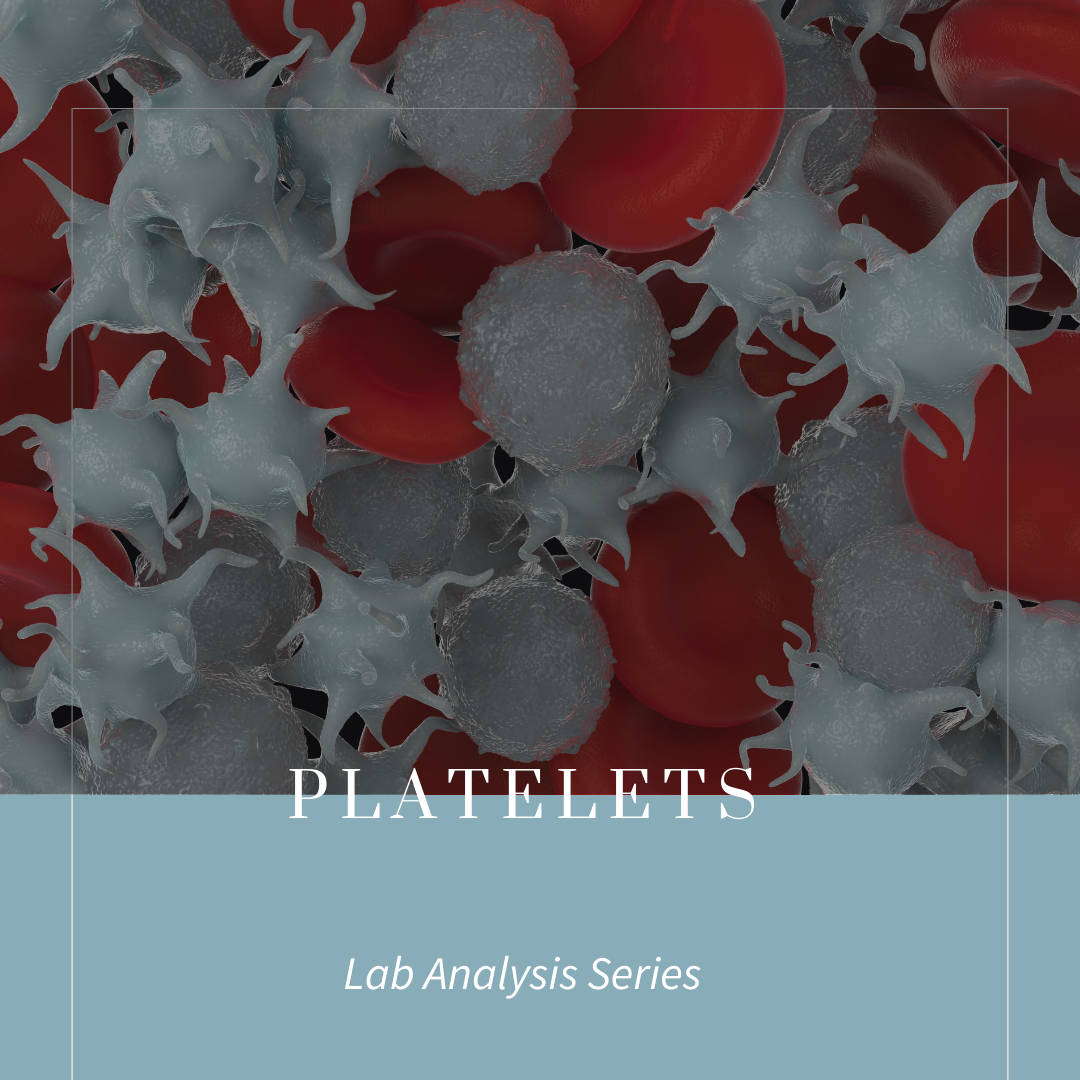
Platelet TestingThe platelet count (PLT) measures the total number of platelets in a sample. This is found in the complete blood count (CBC) panel. Platelets are also called thrombocytes. Thrombo- is Greek for “clump.” The platelet count is a measure of the total count of platelets in a blood sample. Platelets regulate blood clotting. The production of platelets is regulated by thrombopoietin. Platelets have a circadian rhythm, and the highest counts are found at midday. Platelets make up less than 1% of blood cells. Platelets function through adhesion and aggregation. Adhesion is the “sticking” of platelets to affected tissues. Aggregation is the “sticking” of platelets to each other. Blood clotting disorders may affect the normal function of platelets regardless of counts. Platelets also play a role in innate immunity, binding to pathogens and killing them. Platelets in PregnancyPlatelet counts drop 15 – 20 % throughout the course of gestation, this is why it is important that the platelet levels in the first trimester are addressed if low. In the first trimester platelet reactivity decreases to allow for less clotting and easier blood flow. In the third trimester platelet reactivity increases to prepare for childbirth. Within 14 days postpartum platelet counts increase, regardless of birth type. There can be an increase of 2-3-fold in preeclamptic births. This rise will stay elevated until approximately 8 weeks postpartum. Platelet activity fluctuates throughout pregnancy and is a normal feature of pregnancy due to the complex and changing ratios of coagulation factors, collagen changes, hormones, and other physiological factors. There is a high turnover of platelets throughout pregnancy based on these features. Platelets live for approximately 8-9 days in circulation, so changes can be seen almost weekly. Large jumps up or down in analyzing and comparing platelet counts from different pregnancy periods is important in considering levels as pathogenic. High Platelets in Pregnancy (Thrombocythemia/ Thrombocytosis)AKA: Thrombocythemia and/or Thrombocytosis Thrombocythemia is used to described elevated platelets of idiopathic origin. Thrombocytosis is used to describe elevated platelets secondary to another condition. Elevated platelets, >350 X 10^9 /L, are a sign of serious disease and should be assessed by a maternal fetal medicine physician, or other specialized medical provider. 30 – 50% of patients with elevated platelets, thrombocytosis, will not successfully deliver a healthy baby. Some studies have linked slightly elevated first trimester platelets, > 250 X 10^9 /L between weeks 8-10 with miscarriage. <250 X 10^9 /L seemed protective for early fetal growth. As always, this measure should not be taken on its own and should be assessed with other blood parameters to determine risk factors. Elevated first trimester platelets, mean platelet volume (MPV) and red blood cell counts (RBC) in the first trimester increases the risk of postpartum hemorrhage. Causes of High Platelets in Pregnancy
Low Platelets in Pregnancy (Thrombocytopenia)Thrombocytopenia in pregnancy, defined as a platelet count of under 150 x 10^9/L in pregnancy, is the second most common hematological abnormality in pregnancy. Significant drops in platelets can happen early in preeclampsia before hypertension and renal disease appear. Most guidelines raise concern at platelet count < 100 X 10^9 /L, which occurs in < 1% of all term deliveries. Platelet count < 150 X 10^9 /L is associated with a 2-fold increased risk of postpartum hemorrhage. Note: If platelet counts are low in the first trimester the most likely factors are immune thrombocytopenia), genetics, and nutritional deficiencies. If thrombocytopenia presents in the second or third trimesters it is important to rule out preeclampsia and HELLP syndrome, as well as nutritional deficiencies before diagnosis it as idiopathic gestational thrombocytopenia. Causes of Low Platelets in Pregnancy
Want to Know More...Copyright © 2024 Functional Maternity, all rights reserved. The content in this article is not intended to be a substitute for professional medical advice, diagnosis, or treatment. Always seek the advice of your physician or other qualified health provider with any questions you may have regarding your medical condition.
0 Comments
Leave a Reply. |

Hi There!I'm Sarah Thompson, the author of Functional Maternity, and the upcoming book Beyond Results - A practitioner's Handbook to Effective Functional Lab Analysis in Pregnancy. Lab Tests
All
|
 RSS Feed